Around the World in 80 Days
4 minute read
July 22, 2026

Andrew Gillick
Managing Director, Director of Research
Around the World in 80 Days
- Safe passage was an unpriced subsidy that is expiring
- Deglobalization does not mean less trade, just less efficient trade
- The same cargo now needs more time, redundancy and capital
As the on-again, off-again war with Iran continues, global markets seem to have decided that trade flows will soon return to normal. The most visible indicator was the swift selloff in crude, which quickly brought inflation fears down with it (at least temporarily) and returned everyone’s focus to the AI boom. The market has decided, the world is about to get small again. However, there are a few threads that when pulled together start to paint a different picture. On one hand, there are the loud things, the ones filling the headlines, like the continued erosion of the post-Cold War security architecture, two wars that look set to drag on, and a reindustrialization push justified by national security rather than economics. Quietly, safe passage is being repriced.
For most of the last three decades, safe passage was treated as free. Companies designed supply chains around predictable routes, tight inventories and the assumption that someone else would keep the water open. That assumption allowed ships to take the shortest route, containers to keep turning and companies to hold less of everything. That assumption is breaking, with consequences few expected just a few years ago. The conflict can end, and the waterways can reopen, but routes and destinations are going to change as the global economy starts to rewire.
Deglobalization is usually described as a story about less trade. Maybe eventually, but for now, it’s more like less efficient trade. The same cargo is still moving. It is just taking longer to get there. What has become underappreciated in this just-in-time inventory world is how much supply-chain optimization depends on optimal routes and nearly everyone showing up on time. Globalization did not make distance disappear. It made arrival predictable. If the routes get longer or the schedule becomes less reliable, the entire system turns more slowly. Delays rise. Costs follow. The old system was optimized for efficiency. The new one is being built for resilience.
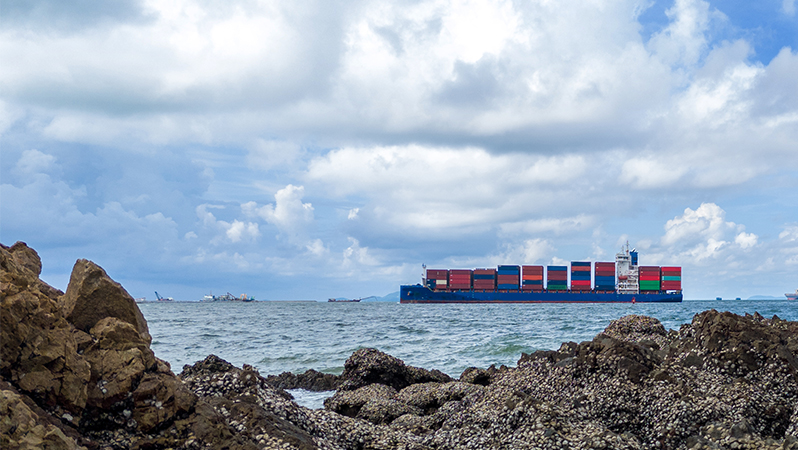
We’re already watching companies look for workarounds. When shipping lines stopped moving through the Strait of Hormuz, containers inside Persian Gulf ports couldn’t get out, while cargo headed into the region piled up at alternative ports. By July, roughly 350,000 boxes were sitting in the wrong places, no longer where the next customer needed them. Some cargo owners moved from ships to trucks. But trucks can carry two containers versus more than 20,000 on the largest ships. Not quite as efficient. Then there is the cargo that can’t wait. Asia-to-North America airfreight volumes rose almost 20% in May, while spot rates jumped 36% in June, partly because server racks and chips cannot wait for the slow boat (from China).
This is what the next version of globalization may look like. Not the end of trade, just more time embedded in it. More suppliers. More inventory. More routes that exist in case the preferred one stops working. More capital tied up in goods that are still somewhere between here and there. None of those changes are dramatic on their own. Together, they reverse thirty years of optimization and force a repricing of what is truly resilient.
The market continues to debate when the Strait of Hormuz will reopen, and flows will fully return to normal. But the harder question is whether businesses will ever trust the route the way they did before. Safe passage may have been the most underappreciated subsidy in the global economy. Around the world in 80 days used to sound like an adventure. It’s starting to sound like an estimate.