When Volatility Creates Value: The U.S. Infrastructure Opportunity
5 minutes
It’s hard not to notice the headlines these days. Markets are repricing. Policies are shifting. Supply chains are restructuring. For patient, long-term investors with deep asset class expertise, this volatility is not a deterrent, but a catalyst. Here is how we look at the investment opportunity, particularly in the transportation and logistics, energy and energy transition, and digital infrastructure sectors in the U.S.
1
The U.S. has one of the most attractive economic backdrops for infrastructure investment
Throughout history, U.S. infrastructure has proven to be a tremendous bet – and we believe that will continue well into the future. This ultimately comes down to the fact that the U.S. has some of the strongest economic fundamentals in the world by far, including:
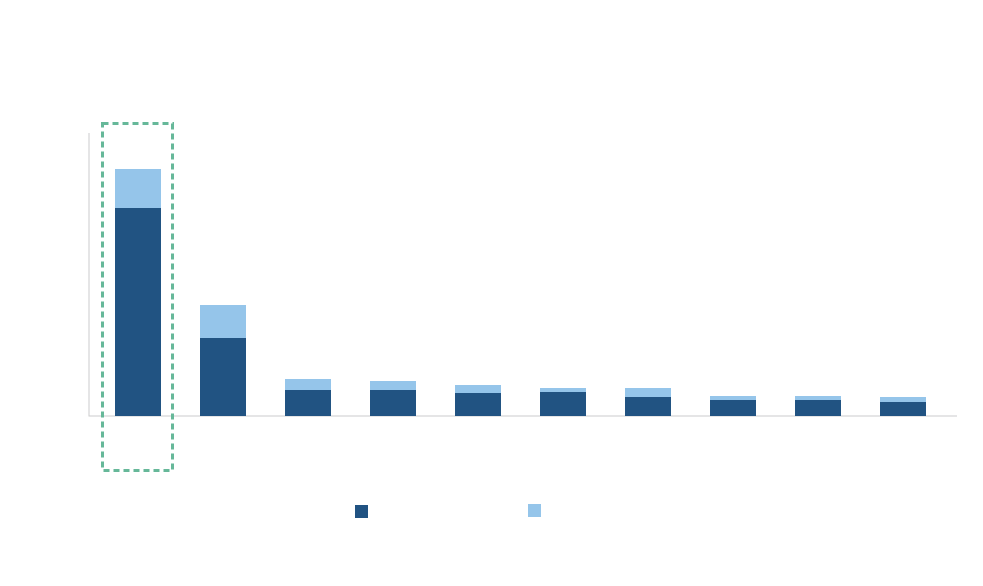
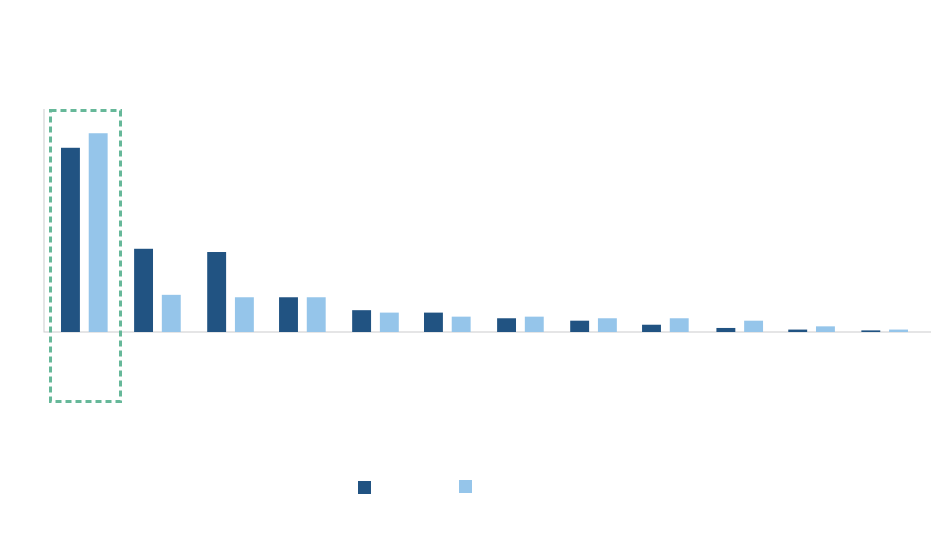
- The world’s largest consumer economy, with $22.5 trillion in consumption in 2025 – 2.5x that of China, the second largest nation, which registered $9.9 trillion;
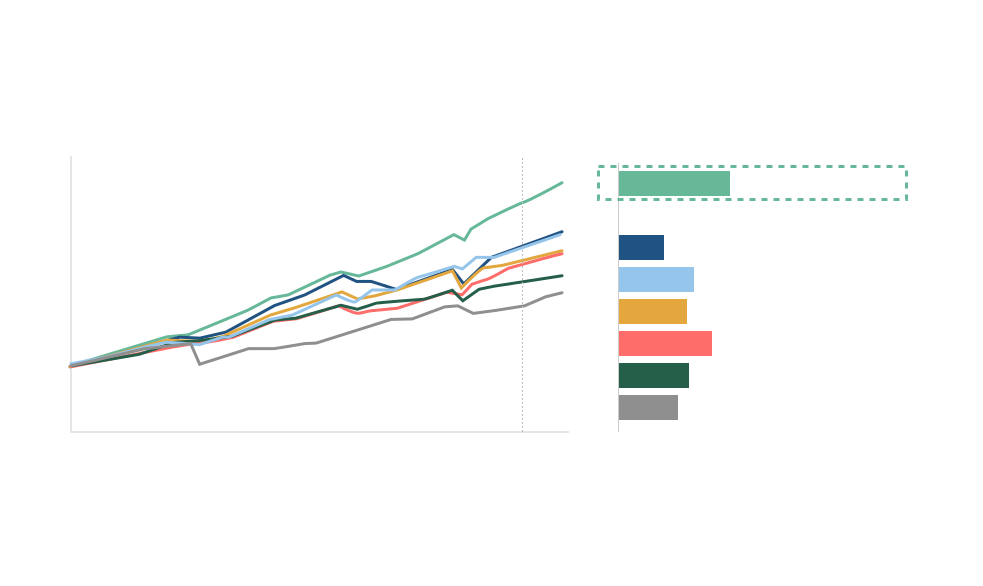
- Consistently superior GDP growth relative to its peers, at about 70-80 basis points above other developed economies over the last 5-7 years; and
- The deepest and most liquid capital markets in the world.
These advantages are structural and durable, transcending any near-term volatility or single policy cycles, and we have strong conviction that they will drive robust demand for U.S. infrastructure for decades to come.
We believe this combination of strong fundamentals and recent repricing makes today one of the most attractive entry points for U.S. infrastructure since the years following the 2008-09 global financial crisis – now with the added distinction that, while the geopolitical environment remains dynamic, the underlying economic backdrop is comparatively solid.
2
Shifting consumption, supply chains, and tariff structures are creating attractive opportunities in U.S. transportation infrastructure
The domestic transportation and logistics sector has reaped significant benefits from the U.S.’s role as an engine of global consumption. We believe the assets that produce, transport, and store these goods – and ultimately deliver them to your door – are positioned incredibly well for continual growth. But how and where goods are consumed, produced, and transported continues to evolve rapidly:
- E-commerce penetration has been growing at double-digit CAGRs for the last decade – we expect that trend to continue for the next decade as well.
- Supply chains are also undergoing structural change. COVID-19 exposed the vulnerability of supply chains that were reliant on a single-source approach – the response has been a diversification of origin points, regionalization of trade routes, and hardening of supply chains.
- Meanwhile, we’re also seeing heavy volatility in freight markets, rising import costs, and continued uncertainty around tariff structures.
In today’s world, infrastructure investors need to focus even more on strong contractual frameworks, the ability to pass through costs, and limiting cost overruns, which have always been core characteristics of true infrastructure assets. Asset leasing models are purpose-built for that environment, with strong cash flow visibility through long-term contracts and greater downside protection vs. volumetrically-exposed transportation assets. In other words, asset leasing models help capture infrastructure economics without taking on operating risk. That distinction matters more in volatile freight markets than in calm ones.
At Stonepeak, we have built much of our transportation and logistics portfolio around this conviction in asset leasing. As of June 2026, we’ve committed nearly $15 billion to transportation and logistics investments, including nine asset leasing platforms – among them, one of the world’s largest lessors of intermodal containers, and a leading provider of marine chassis in North America.

3
Policy recalibration is opening up new investment opportunities in the U.S. energy market
The passage of the One Big Beautiful Bill Act (“OBBBA”) has reshaped several aspects of U.S. energy policy, particularly around renewables and tax incentives. While some have interpreted these changes as negative, we believe they reshape rather than derail the structural tailwinds the Inflation Reduction Act set in motion.
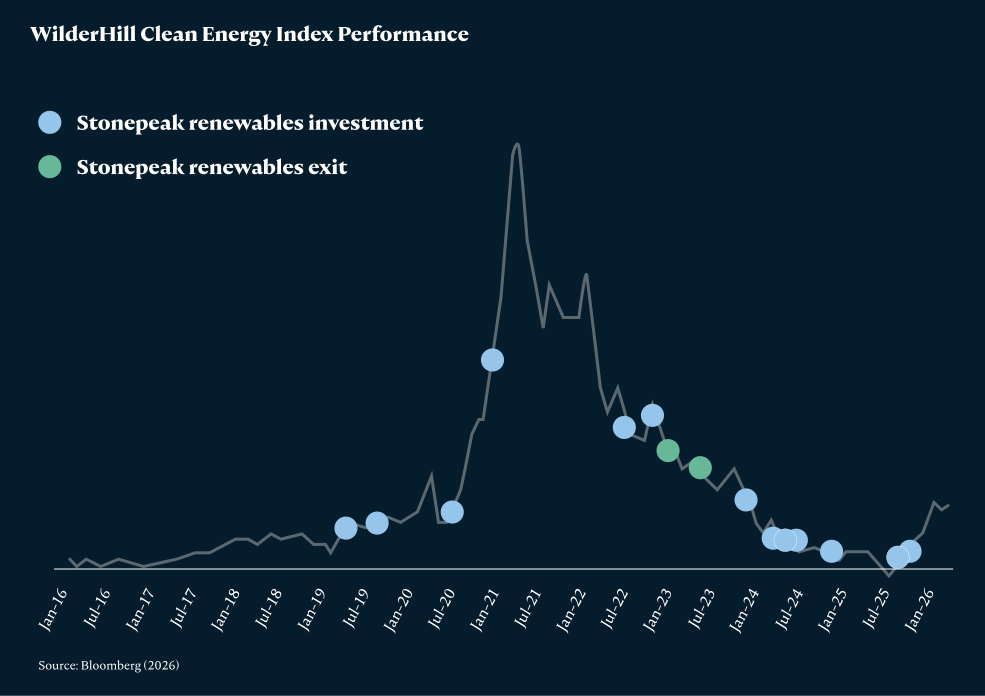
- In renewables, we’re experiencing one of the best investing environments we’ve seen in several decades. Recent years, going back to the early 2020s, were characterized by compressed returns, elevated valuations, and risky assumptions around recontracting and merchant power prices. But rising interest rates and policy changes, including through the OBBBA, have reduced that frothiness.
- Recent policy recalibration has also created clarity around where support is durable. Battery storage emerged from the OBBBA with its 48E investment tax credit intact – a deliberate signal that grid reliability and dispatchable capacity remain priorities that transcend the partisan debate around renewables.
Today, we’re pursuing structured investments in operating renewable assets, which can offer compelling base returns with meaningful downside protection, in our view, by avoiding risks related to permitting and other factors – an opportunity that was largely unavailable during prior market peaks.
4
In traditional energy, recent geopolitical developments have only reinforced the importance of natural gas
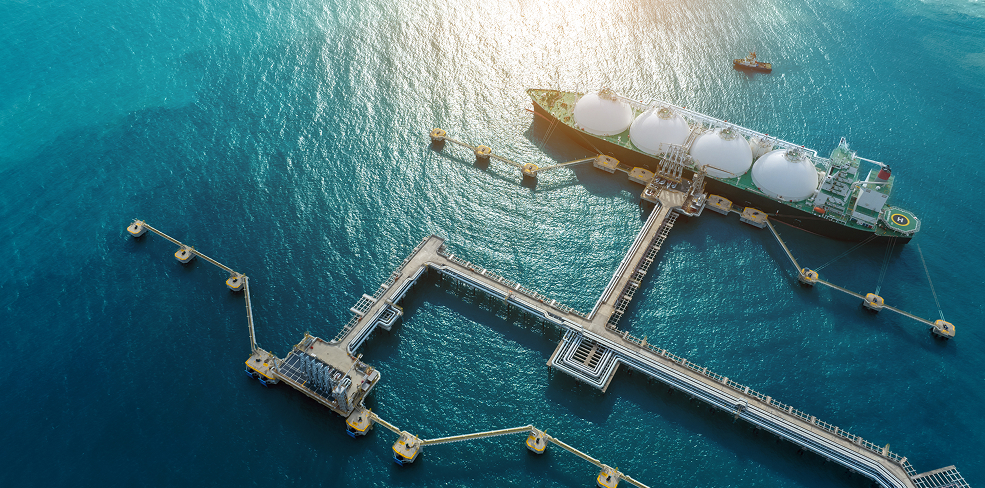
Natural gas has been a core part of our investment thesis since Stonepeak’s founding, through cycles of growth and contraction. Recent geopolitical developments and the renewed global focus on energy security and flexibility have given the U.S. an even bigger role to play in exporting and shipping liquified natural gas (LNG) to other end markets globally.
Over the last decade, natural gas has cemented its place as an indispensable component of the global energy mix. That recognition has been reflected in valuations, which have risen substantially in recent memory. In this environment, how you invest matters as much as where you invest. Selectivity, disciplined underwriting, and smart structuring are critical.
In 2025, we acquired a 40% interest in Louisiana LNG, an LNG production and export terminal owned by Woodside Energy Group, in a $5.7 billion transaction. We moved quickly and creatively against a favorable backdrop for LNG, and structured the deal to minimize permitting uncertainty, navigate tariff noise, and limit cost overrun risk.
5
With the advent of AI, digital infrastructure continues to evolve as a critical pillar of the modern economy
We have been investing in data centers since 2017, long before AI made it consensus. That history matters because data center investing rewards relationships, technical fluency, and development expertise that take years to build. Latecomers are learning that now.
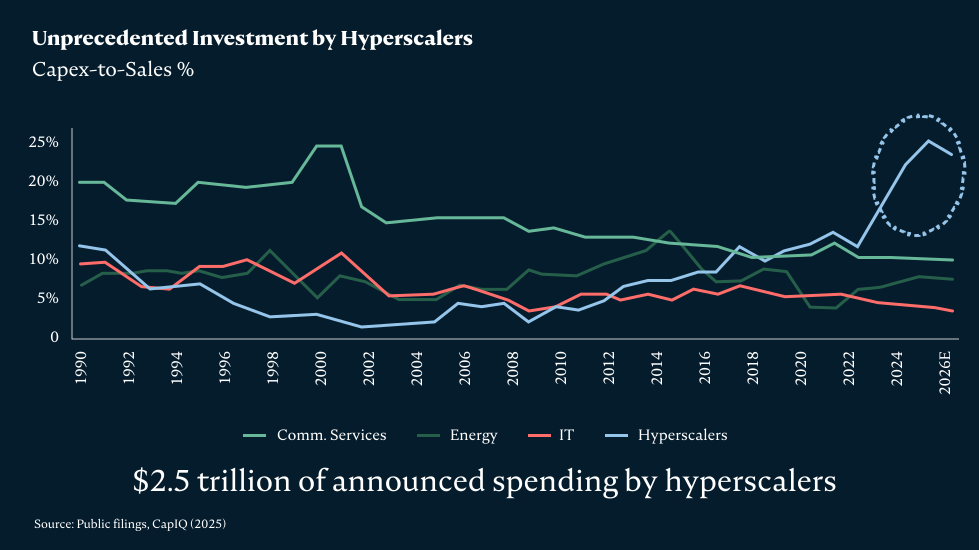
As data center demand has surged, public market valuations have run well ahead of underlying economics. That dislocation is creating attractive entry points for developers who can build new data center facilities and platforms of scale at the right cost. We are currently pursuing that opportunity in North America through Montera Infrastructure, a platform we launched in early 2025 targeting AI-driven newbuild hyperscale buildouts, where we are seeing a meaningful return uplift opportunity as yields on cost rise across the industry.
6
Navigating dislocation requires a disciplined investment approach, scale, and deep specialization
Today’s dislocation is creating clear pockets of strength and weakness across the industrial and consumer economies, and distinct opportunities across the infrastructure landscape. In transportation and logistics, we see this in specialty warehousing, environmental services, and waste; in energy, we see real opportunity in renewables and LNG; and in digital, we see it in data center development. Against that backdrop, we continue to take a disciplined approach to deploying capital, utilizing our firm’s global platform and deep asset class specialization:
- Our approach to underwriting remains intentionally conservative. Entry price is the first and most important line of defense against volatility.
- We structure investments with an emphasis on delivering downside protection when macro conditions evolve unpredictably.
- We bring operational expertise to every asset we own, with a focus on creating value beyond what financial engineering alone can deliver.
The case for U.S. infrastructure has never depended on a single policy cycle or a benign macro backdrop. It rests on structural demand, irreplaceable assets, and the compounding advantage of deploying capital when others are sitting on the sidelines. And while volatility can be challenging, and at times, uncomfortable, it’s periods like these that create the most favorable conditions for thoughtful, long-term investing. At Stonepeak, with experience across cycles and a proven ability to turn uncertainty into advantage, we are designed for this dislocation.
It’s hard not to notice the headlines these days. Markets are repricing. Policies are shifting. Supply chains are restructuring. For patient, long-term investors with deep asset class expertise, this volatility is not a deterrent, but a catalyst. Here is how we look at the investment opportunity, particularly in the transportation and logistics, energy and energy transition, and digital infrastructure sectors in the U.S.
Explore
